All posts by Joe Greenwood-Hau

One Year On: The Many Factors in Brexit
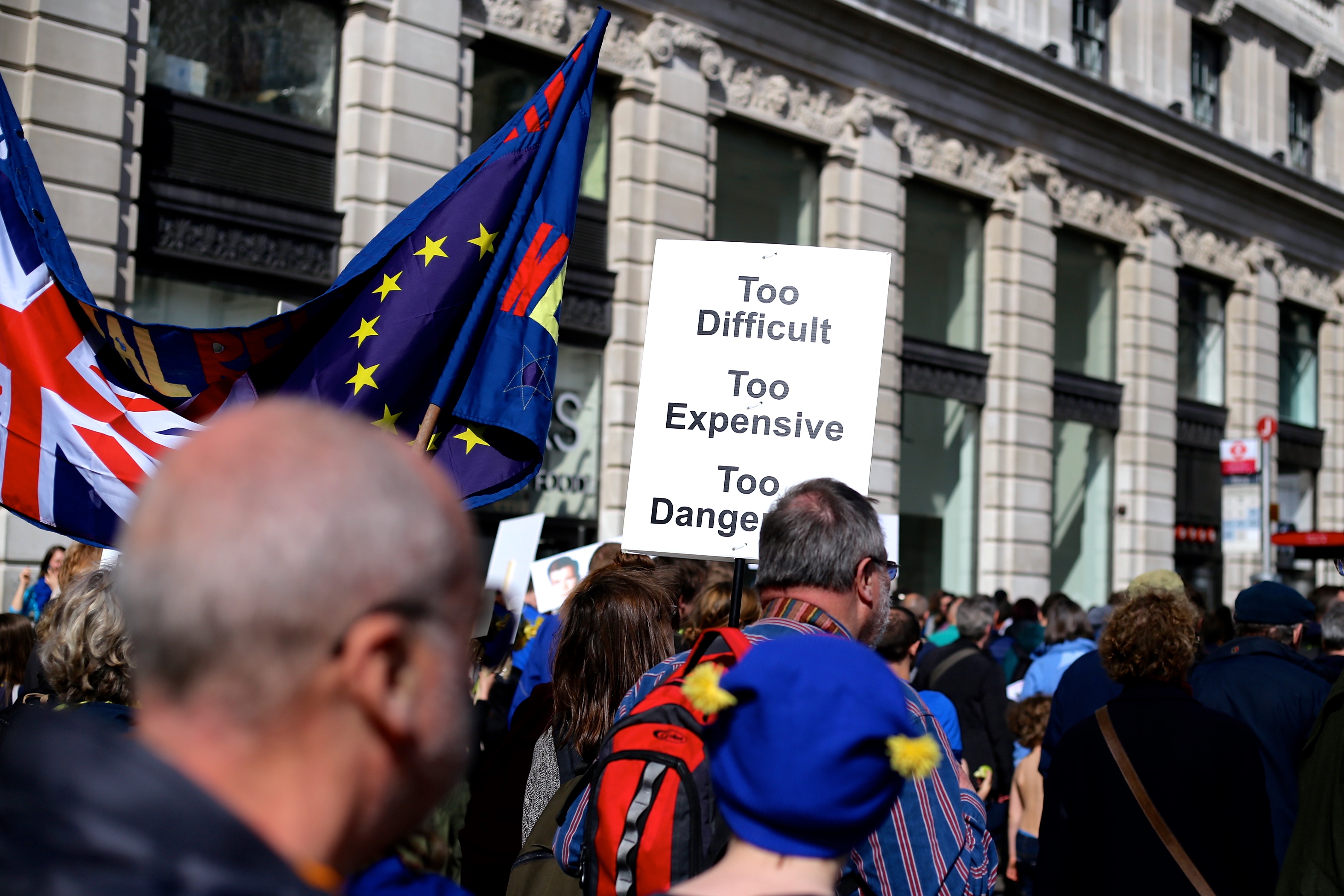 Pro-EU Protest March, London, 25th of March 2017, via Wikimedia Commons.
I’ve heard the claim made in multiple contexts, usually amongst Remainers, that Jeremy Corbyn is to blame for the outcome of last year’s referendum on the UK’s membership of the European Union. This strikes me as an overly-simplistic analysis that should be heavily caveated but rarely (if ever) is. Indeed, I think that most political outcomes are the result of an interaction of context and actors, so I’d probably be equally unsatisfied with any attempt to pin the blame for Brexit on a single factor. As soon as I hear claims like this my mind starts cycling through all the other things that plausibly contributed to the outcome, and I rapidly reach the conclusion that it’s pretty hard to weigh their importance against each other and thus conclude which ones are more important than others, let alone to identify the decisive factor. This is tied up with the difficulty of demonstrating causality in relation to social outcomes (of which political decisions are an element), and I think we should always try to talk about as many of the influences on an outcome as possible. Of course, if we’re lucky enough to have data that measures all those plausible influences then we can think about finding out which are more closely correlated than others with the outcome, and interpret this to mean that there is some sort of relationship between them. I don’t have this data (and I’m not sure it exists) so my focus here is on flagging up the things that, to my mind, are likely to have influenced the outcome of the EU referendum. In doing so, I also hope to show that a range of factors all had a part to play in that outcome, and that trying to pin it on one of them alone is unconvincing. Indeed, even if we ignore the factors that are unlikely to have changed, there are enough things that could plausibly have changed to make blaming any one of them a bit of a stretch. So, let’s start with the contextual factors, the order of which does not imply anything about their presumed importance:
The Great Recession
There’s the obvious way in which this had an impact; namely, the financial crisis caused serious economic problems, and problems of economic coordination, in the European Union. These indicated weakness whilst, at the same time, prompting a response that could be characterised as heavy handed. The latter played into existing narratives of the EU being distant, detached, and out-of-touch with the concerns of ‘ordinary people’ (there’s no such thing; most people think they’re ordinary but no-one is). At the same time, the economic downturn had an impact on domestic politics, prompting austerity and reducing or removing economic security, or the sense of it, for many. Economic insecurity often makes people more risk averse, leading them to want to batten down the hatches and seek familiar forms of security. The frame of reference for that security will vary from person to person but there are enough for whom the European Union has not always been the status quo that returning to ‘British sovereignty’ (i.e. ‘taking back control’) seems the safer, and more familiar, option. So, we know that economics often matters in voting, and the economic circumstances preceding the EU referendum meant that it was plausible to paint the EU in a bad light whilst also promoting a desire to return to a non-EU state of security for many.
Explanations for the economic downturn
In the aftermath of the financial crisis different causes were identified and emphasised by different political actors, and these included reckless behaviour by banks and their employees, the financial decisions made by large sections of the public, government policy (be it spending too much during the good times, or failing to regulate financial markets properly) and, as the downturn unfolded, remote international institutions such as the EU. The reason for some of those explanations becoming more accepted than others remains mysterious to me (crucially, in line with the point of this blog, I suspect many things played a part) but it seems that the Conservative Party achieved a major victory by emphasising the issue of state spending rather than irresponsible behaviour by banks and bankers. This played to their strength as the party that is seen as more responsible with state spending, whilst ‘banker bashing’ played to Labour’s image as the party of ‘working people’ against ‘the elite’ (though this was fatally undermined by their failure, when in power, to adequately regulate financial markets (a difficult thing to do, perhaps, because of their international nature)). This meant that a domestic solution to the economic downturn (i.e. limiting state spending (thus making the promise of the notorious £350 million tempting)) could be emphasised instead of international coordination and cooperation (e.g. regarding financial market regulation), rendering the EU part of the problem rather than part of the solution. Further, the focus on one element of, and explanation for, the economic downturn contributed to the electoral outcomes in 2010 and 2015 and thus set the scene for David Cameron to call the EU referendum. So, prevailing explanations for the Great Recession contributed the circumstances that allowed the referendum to be called whilst, at the same time, promoting solutions centred on national rather than international governance.
Strain on public services
This is obviously related to, but not exclusively the result of, the economic downturn and the prevailing explanations for it, whilst government policy (both in response to the above factors and preceding them) and demographic changes have also played a role. These strains are real and can be seen by people in their day-to-day lives but have also been emphasised in the media (who, perhaps, have a duty to report problems with such services) and by political parties (both for electoral purposes and because it’s a legitimate policy concern to consider). The presence of the idea that public services are under strain contributes to the previously mentioned sense of insecurity that can lead to people seeking familiar solutions (again, ‘taking back control’, with the middle word being key) whilst also feeding a belief that there is an uncaring elite who are making bad decisions for the population. Such mud sticks more easily to distant institutions than ones that are closer (this is related to a concept called the paradox of distance[1] in which people rate their local services or MP better than they do national services overall or MPs as an entire group; in the same way, Westminster is closer (and more familiar) than the institutions of the EU). Thus, when people have a sense that things are going wrong and are trying to place the blame, they will be more likely to pin it on something that is, in some sense, distant. Again, this did not bode well for the EU.
The coalition government
The Conservative and Liberal Democrat coalition government administered the ‘necessary medicine’ in response to economic downturn and, thus, was a reflection of and a contributor to the previous two points. Further, by uniting two previously opposed political parties it contributed to the general sense, held by many, that there is a ‘them’ (politicians) and an ‘us’ (‘ordinary’ people). This sustained the idea of the very establishment (with the EU as part of it) that would subsequently be given a bloody nose in the EU referendum (with the outcome, arguably, being about ‘taking back control’ from the generic establishment ‘them’ as well as from the EU specifically). Further, it significantly weakened the Liberal Democrats, undermining the sense that they were an alternative, or opposed, to the Conservatives (as has often been the case in coalitions, their independent identity was washed away by association with a larger and more prominent partner). This meant that Liberal Democrat seats became juicy low-hanging fruit for a well-run and well-targeted Conservative campaign in 2015, thus paving the way for the majority that allowed David Cameron to instigate a referendum on EU membership.
The expenses scandal
This feels like the dim and distant past now, but it played a role in the 2010 election that resulted in the above coalition, and thus indirectly contributed to the 2015 election outcome. More to the point, though, it was symbolic of, reinforced, and expanded the common mistrust of politicians in the population. Thus, it affirmed the sense, again, that there is a distance ‘elite’ (perhaps incorporating, as well, the much-maligned experts) with different interests from the general population. It was this very group that was then, a few years later, seen to be unified behind another position, the Remain Campaign, that could be presented as in their own interest (and concomitantly seen as questionably in the interests of ‘ordinary people’). Thus, the role of the expenses scandal, and other scandals and news stories presenting politicians in a bad light, was to prompt not only mistrust but also a rejection of those who advocated remaining in the EU.
Divided parties
Of course, were it not for (ongoing and long-term) disunity over the EU in the Conservative Party, David Cameron would not have felt the need to ‘resolve’ the issue by calling a referendum. However, all parties are coalitions so disunity can emerge on a range of issues and at different times. The Labour Party was also disunited, though less severely, over the EU membership and this meant that there could be representatives of both parties on each side of the referendum campaign (indeed, the presence of Labour MPs amongst the largely Conservative ranks of Leave supporters was an important influence on some voters), whilst also meaning that Jeremy Corbyn and some of those around him were less-than-enthusiastic about the Remain campaign. Further, and more tenuously, the divide between liberal and social democratic elements of the Liberal Democrats allowed a situation in which the party promoted itself in the latter light for many years but then, with the ascendance of the Orange Book liberals, went into coalition with the Conservatives (linking with the previous point). This not only hurt the party at the next general election, and played into the ‘establishment’ narrative (i.e. ‘they’re all the same’), but also made the idea of untrustworthy and dishonest politicians (already common) more salient, which would prove important in the EU referendum.
UKIP
Their success as a political party was always a longshot (given the electoral system in the UK) but it’s fair to say that UKIP has been one of the most successful campaigning groups of recent times. They used electoral politics as one of their main campaign tools, not to win seats but to threaten the main parties with losses. Certainly, they were aided by other contextual factors, but the presence of this group of dedicated campaigners helped make the EU, and especially the topic of free movement of people, an issue that could not be ignored. Nothing more need be said; UKIP’s influence is self-evident, and should not be forgotten as they become electorally insignificant.
A divided electorate
Of course, UKIP would have been on a hiding to nowhere were it not for the fact that plenty of the electorate felt, on some level at least, that the EU had disempowered the British state, facilitated levels of immigration that they were uncomfortable with, and sustained values that were at odds with their own. These views may not have been solidified at the outset (though they certainly were for some) but there were people who were more or less predisposed to adopt pro- or anti-EU positions. There is a concept in political science called heresthetic,[2] which is the ability to identify and activate previously latent divisions in an electorate (i.e. make new dimensions of politics salient) for strategic gain. It seems clear that the emergence of the EU as a clear dividing line is the result of successful heresthetic by some (prominent members of UKIP included), but this also indicates that some level of meaningful division existed in the first place. That such a division was made salient threw the traditional political parties off their game because it was a cross-cutting issue, with the divide between Labour’s traditional and more recent core groups of supporters being a key example. This meant that normal partisan appeals could not be made in the referendum campaign, and the outcome was far from a foregone conclusion.
The left behind
There are multiple explanations for the above division in the electorate, and one of the most prominent is that there is a section of the population who can be considered ‘left behind’.[3] That group is often characterised as older, white, male, less educated, and working class, but those characteristics are not pre-requisites. The main thing is that people in the ‘left behind’ group have a sense that changes in the UK (and world), over whatever period of time, have not been materially beneficial to them. Thus, they are likely to take issue with things such as free movement of people (perceived to remove job opportunities and put strain on public services), offshoring (again, seen to remove job opportunities), and free trade (which is bound up with the preceding points and the broader concept of globalisation). These are all things that are seen to be beneficial to other sections of society at the expense of the ‘left behind’. This leads such people to reject (i.e. vote against) the policies and institutions that have brought about the changes that they feel have harmed them, and also to consider themselves different from the groups that are seen to have benefited from such policies. This is especially so in relation to the ‘elite’ who have been responsible for implementing the policies and who, again, the ‘left behind’ wished to give a bloody nose.
A commitment to authority
Another major explanation for the division in the electorate that led to the outcome of the EU referendum is competing basic values. Specifically, it is argued that some people are more committed to the exercise of authority in social contexts. For instance, such people are more likely to support children being taught to respect authority in school, to think that punishments for convicted criminals should be stricter, and that the death penalty should be applied in some cases. Thus, such people are described as having authoritarian social values, but this is not intended to be pejorative. Crucially, those values can cross-cut the material circumstances that differentiate groups such as the ‘left behind’ from others and there are more or less wealthy, and more or less privileged, people who are committed to the exercise of social authority. Indeed, it is perfectly possible to believe in both economic redistribution and the importance of social authority, so views that are considered ‘left wing’ are not mutually exclusive with ‘social authoritarianism’.[4] A question of particular interest here is what the roots of such values are, with possible explanations including socialisation, basic psychological dispositions, or some interaction of the two (which seems most plausible to me). Regardless of their origins and relationships with other characteristics, however, the key thing is that such values also incline people to support the clear exercise of authority by a single institution or limited set of institutions, especially if they are familiar (as the British state undoubtedly is to most in the UK). Thus, any undermining of ‘sovereignty’ by the EU was much less likely to be tolerated by people with a commitment to authority, especially to the extent that the EU institutions are complex and unfamiliar, are predicated on consensus rather than clear exercise of power by one group, and espouse values (e.g. universal human rights) that may be opposed to those held by ‘social authoritarians’.
Educational disparities
The relationship between educational levels and EU referendum votes has been observed (i.e. areas with lower levels of education tended to have a higher proportion of the population voting Leave), and this relationship is open to interpretation. For me, this is about the types of knowledge that people hold, and the broader cultural divides that exist in society. In other words, education can be seen to have three not entirely reconcilable functions: first, to engage people in a dialogue that promotes thinking about and understanding of the world; second, to set particular standards of knowledge and understanding, and rank people against these standards so that qualifications can be awarded; third, to imbue people with particular norms and values. To the extent that the latter two functions are emphasised, education is likely to imbue people who are educated with different norms and values to those who are not, and thus to create competing cultures. Of course, this does not happen only in educational contexts (early years are also important, especially in creating lower-order beliefs[5]) but they are clearly important. The resultant cultural differences can be related to the above two explanations for the divide in the electorate that led to the EU referendum outcome.
Prevailing media coverage
I won’t spend ages on this because it’s been done to death, and because the issue of cause and effect is particularly difficult (i.e. the classic question of whether the media reflects or shapes the views of the public). Still, it seems likely that the long-term and widespread coverage of, and emphasis on, the EU’s failings (despite not always being accurate) with very little coverage of, and emphasis on, its successes affirmed the views of those who opposed membership, weakened the views of some of those who supported it, and made the issue salient when it might not have otherwise been. Indeed, I don’t think the power of the media lies only (or even mainly) in the tone with which it reports issues but, instead, in the decisions about what to report and not report prominently, and in the links between issues that can be made. Thus, media coverage of the issue of immigration is also important, again not only because of its tone but because it made the issue prominent in people’s minds and linked it with the EU. Indeed, to the extent that people were concerned about the former, this made them more likely to vote to leave the latter. Thus, when it came to the vote, the table had been set not in the previous months of campaigning but in the preceding years of national media discussion of particular issues, and emphasis of the links between them. In light of all this, I could include a range of editors and proprietors in the list of individuals that is outlined below, but I’ll leave it at giving them a non-specific name-check here.
The EU
The previous point argues that the media coverage of the EU was lop-sided, emphasising the problems more than the benefits (again, though, perhaps the media has a duty to report things going wrong more than things going right), but there was also material that provided the basis for some of that coverage. The horror stories about ‘red tape’ regulations (e.g. straight bananas) are well known and, whilst many of those stories were over-the-top or downright inaccurate, it is the case that the EU is involved in many areas of regulation. Thus, to the extent that one is opposed to those sorts of regulations it makes sense to be opposed to the EU (though it has other functions too). Further, for many years it was possible (and, perhaps, legitimate) to be sceptical about the financial comings and goings of the EU (though this has been less the case since 2007), which contributed to the idea of it being wasteful (and even corrupt). More important, to my mind, than the output of the institutions is their very structure. Education around the setup of the EU could be improved but, regardless, that setup is rather complicated. There are two elements of the executive branch, the European Council (heads of state or government of the member countries) and the European Commission (nominated by member states, adopted by the European Council, and approved by the European Parliament), with only the latter having the capacity to propose laws (though one element of the legislative branch (the European Parliament) can also ask it to do so). The legislative branch then has two elements in the form of the directly elected European Parliament and the non-directly elected Council of the European Union (distinct from the European Council, mentioned previously), which is referred to as the Council and made up of relevant ministers (depending on the policy area being discussed) from member countries. The second of those bodies also has some executive powers, and it makes decisions using a special system called qualified majority voting. Further, all of the institutions and powers of the EU have evolved over the course of its existence. This is positive (allowing responses to circumstances) but also adds further complexity in the sense that one must pay attention in order to stay up-to-date not only with the decisions of the EU but also how they are made. I’ve tried not to be opaque in the preceding descriptions but I think they give a sense of the extent to which the institutions of the EU can be viewed as inaccessible. This is not helped by the fact that there is no individual constituency link to the European Parliament (there are seven Members of the European Parliament (MEPs) for my region; three Conservatives, three from UKIP, and one Labour) and it’s remarkably difficult for such a small number of people to meaningfully engage with a large and dispersed electorate. Thus, overall, it’s understandable that the EU can feel complex and distant, thus rendering it an irrelevance (which does not motivate endorsement) or an imposition (which prompts opposition).
The Campaigns
The Remain campaign looked like (was?) an ‘establishment’ project, whilst the Leave campaign looked like a scrappy insurgency. The former appealed to the head rather than the heart, whilst the latter did quite the opposite. This is important because the outcome seemed like Remain’s to lose; had they found some content appealing to emotions and, perhaps, elevated a more diverse bunch of people to prominent campaign positions, it seems plausible that the result could have been reversed. They appear to have underestimated the extent to which the electorate was looking for an opportunity to exercise their democratic right to vote against expert advice. Furthermore, the Leave campaign benefited a great deal from prevailing media coverage and, despite being funded and led by figures who are absolutely not ‘of the people’, looked anti-establishment. This may have been helped by the fact that they had few scruples about the ‘evidence’ they used, and being controversial is a very good way to look like the outsider who won’t be silenced whilst standing up for what they believe in. Splits meant that they could have fallen apart, but they kept it together, whilst the Remain campaign cruised to failure.
With the contextual factors covered, we can turn to the individual actors who made decisions within the context that existed:
David Cameron
Handed the decades-old problem of a party divided over Europe, David Cameron decided that the best way to resolve that squabble was a divisive national referendum. I’m exaggerating of course, and it’s not that simple; it really is a difficult internal party division, and he was additionally confronted by a meaningful electoral threat from UKIP (again, not because they could win seats but because they could split the Conservative vote and cause them to lose seats). Nevertheless, it seems that he (and others) were complacent about victory, and he can be counted amongst the pro-Remain leaders who failed to see the need to appeal to emotion in the campaign (alas, I think this may be common amongst those who simplistically attribute humans the characteristics of utility maximising calculus machines). Further, in terms of having a campaign in which one side (the status quo) was likely to be hamstrung by the appearance of representing establishment interests, it might’ve been sensible not to have one of the main leaders being, well, David Cameron. Of course, his background is beyond his control, and it would’ve been difficult for him to take a back seat (without this looking like a lukewarm endorsement, which could’ve been equally damaging) but, again, he did choose to call the bloody referendum.
Nick Clegg
To the extent that Nick Clegg represents the Orange Book liberals within his party, her can be linked to the previous points covering divided parties and the coalition government. In deciding (along with other senior party colleagues) to go into coalition with the Conservatives, despite having presented a policy agenda to the public that was rather distinct, he sowed the seeds for the party’s near-elimination in 2010 (which was worse than the preceding decline in the Liberal Democrat vote share otherwise suggested). This, in part, facilitated the Conservative majority that allowed David Cameron to work his referendum magic. More to the point, there was a choice, despite the line that ‘there had to be a government in a time of national crisis’. For a party that advocates constitutional reform, the leader seemed rather eager to maintain Britain’s ‘tradition of strong government’ (i.e. the constitutional status quo) rather than, for instance, offering to support a Conservative minority government on legislation in the vital national interest (e.g. bank bailouts, if you’re so inclined) without signing up to all the things they claimed to oppose (e.g. the Health and Social Care Act, Welfare Reform Act, and Legal Aid, Sentencing and Punishment of Offenders Act). Incidentally, I struggle to think of an electoral line that’s weaker than ‘yeah, sure, the stuff we supported in government was bad, but it was slightly less bad because we were there’. Note, there’s no attempt to say it was good. A confidence and supply arrangement would have allowed the Liberal Democrats the capacity to stay closer to their principles, but the party leadership including Nick Clegg chose not to pursue that path in return for the ground-breaking, world-changing opportunity to have an AV referendum. Or something.
Nigel Farage
As with UKIP in general, not a lot needs to be said here; his impact isobvious but that doesn’t mean it should be overlooked. In Nigel Farage, UKIP got a leader who was not only charismatic but also could give the impression of being ‘straight-talking’ and a ‘man of the people’ (despite all the evidence to the contrary). He was also, apparently, pretty tireless and had the brass neck to say controversial things and stick to them, which shored up core support whilst having some wider appeal.
Aaron Banks
It’s tempting to write a single, four letter, word summary of this gentleman but I’ll avoid doing so. Again, not a lot needs to be said; to a large extent he bankrolled UKIP and Nigel Farage, not-to-mention the non-official Leave.eu campaign, allowing them not only to continue their activities but also to raise their profiles.
Boris Johnson
A popular high-profile political figure with appeal beyond his party (such things are rare), and who (despite his dispatches from Brussels as a journalist, linking to the point about media coverage above) was apparently undecided at the outset of the referendum campaign. Part of the reason for his popularity and appeal beyond the Conservatives was his reputation as a maverick, which perhaps pointed towards endorsement of the more anti-establishment Leave campaign (despite being so clearly part of ‘the establishment’). Nevertheless, there’s good reason to think that some voters could be swung, at least in part, by his decision on the matter, and his hands certainly weren’t tied.
Gisela Stuart
The most prominent Labour member of the Leave campaign, Gisela Stuart is a good example of the importance of party divisions in the referendum. She is certainly not a well-known political figure (though perhaps more so after the campaign) but her role is likely to have been picked up by high-attention undecided voters (a key group because they can be won over to either side, and are likely to turn up at the polling station). This is important because the fact that she took a different line to most of her fellow Labour MPs can be seen as acting against type. Indeed, people expected Nigel Farage, Peter Bone, and others in the awkward squad to be on the Leave side, but the presence of a ‘liberal left-winger’ (and a citizen of another EU country to boot) amongst those ranks was less expected. Such unexpected information is more persuasive (e.g. if a fiscal hawk says that spending needs to be raised people will take that more seriously than if a fiscal dove suggests the same), and it also allowed the issue to be, at least in part, non-partisan. There were other political figures who can be put in the same group, but Gisela Stuart is the most prominent example.
Jeremy Corbyn
The case being made in this post is not that Jeremy Corbyn had no part to play in the outcome of the EU referendum, but that his actions were only part of an interaction between context and actors. So, it is fair to say that his position on membership of the European Union was lukewarm, and that he could have done more to proclaim clear support for remaining, and motivate Labour voters to turn out and vote for that option. Still, his less than wholehearted endorsement of membership was known when he was elected as leader and should have come as no surprise. Further, and as noted previously, the Labour party has a divided electorate in relation to the issue of Brexit, making it a difficult task for any Labour leader to take a clear-cut position on the matter. So, part of the picture? Yes. But all of it, or most of it, the largest part of it, or even the decisive element? No.
So, what does all of the above suggest? Well, as was the argument at the outset, it demonstrates that the outcome of the EU referendum was the result of, to become boringly repetitious, an interaction between context and actors. All of the above elements played their own part in the outcome but none of them alone was decisive. Without the economic downturn the EU would have been less likely to look simultaneously weak and heavy handed, whilst there would have been less capacity to argue for cuts in national state spending. The pressure on public services would thus have been reduced, the electorate would have felt less insecure, and they would have been less eager to seek familiar (national-level) ways to address that. At the same time, the outcome of the 2010 election would have been different, with a coalition that reinforced the view that politicians are all the same and cannot be trusted (which also emerged from the expenses scandal) less likely. That coalition also relied on divided parties in which the Orange Book liberals could become the leaders of the Liberal Democrats and contradict its social democratic image by aligning with the Conservatives. Indeed, were the parties not divided there would have been much less need for a referendum, and there would not have been an opportunity for Jeremy Corbyn to ascend to the leadership of the Labour Party as a left-wing insurgent. Further, the divide in the Conservative Party as well as the divided electorate could be exploited by a strong campaigning organisation like UKIP.
That divide in the electorate was a prerequisite for the referendum, and its basis was a combination of meaningful differences in material circumstances, different basic (ideological) commitments to the exercise of authority in society, and educational disparities. The latter is important not only because it imbues particular knowledge in some groups and not others, but also because it creates different sub-cultures with different norms and values. Such competing sub-cultures can be plugged into by prevailing media coverage, especially to the extent that it is aimed at some groups and not others, and this exaggerates existing divides. Further, such coverage hardens the views that align with it and, to the extent that it is prevailing, weakens views that don’t align with it, thus solidifying likely outcomes based on the other contextual factors. Of course, this might have mattered less had the EU not provided (primarily constitutional) material that made it look distant, complex and, perhaps, untrustworthy. Further, had the Leave Campaign been worse run or the Remain Campaign been better run, especially in the sense of appealing to people’s emotions, there was the chance for a different outcome despite the other contextual factors. Within the context set by those factors, David Cameron’s decision to hold a referendum, facilitated by Nick Clegg’s decision to go into coalition and set the table for the Conservative’s 2015 electoral victory, set the train in motion from the penultimate station to the terminus. Along the way, Nigel Farage’s tireless campaigning, Aaron Banks’ money, Boris Johnson and Gisela Stuart’s support for Leave, and Jeremy Corbyn’s less-than-enthusiastic endorsement of Remain all ensured that points weren’t changed, and the train continued along its track (I’ll leave the metaphor there now).
Could all of the above things have changed? The answer in relation to contextual factors is tricky; context does change, but not necessarily quickly, in an expected direction, or because of the actions of a particular individual (despite possible intent). Had previous governments around the world co-ordinated better in order to regulate financial markets, the Great Recession and all its knock-on effects might have been averted or mitigated. Such coordination was unlikely but possible, as was the potential for explanations of the downturn that didn’t require austerity to become dominan and place public services under more strain. The subsequent coalition government certainly did not have to happen, and neither did the behaviour of the MPs embroiled in the preceding expenses scandal. Those MPs actions could have changed, but the nature of parties is to be divided (in the sense that they always encompass competing positions), so this is always likely to be a feature of the political landscape, whilst UKIP had been part of the furniture for some time.
Divides in the electorate and the things that underpinned them are a function of the vast never-ending interaction of humans that we call society. That’s hard to change. Being disposed towards the exercise of authority in social contexts is likely to result from early life experiences and may be difficult (but not impossible) to alter subsequently. The economic disparities that created the ‘left behind’, and the educational disparities that sustain potentially competing sub-cultures can be influenced by government policy and demographic change but they are hard to change decisively in a short period (or even in an intended direction). Prevailing media coverage can certainly alter, given that it’s in the gift of a few editors and proprietors, but that’s to underestimate the extent to which they are committed to their existing (political) positions. In a similar ‘could change but probably wouldn’t’ camp is the EU itself, which is part of what made the Remain campaign’s job more difficult. Still, that job could plausibly have been done much better, whilst the Leave campaign’s divisions sowed surprisingly few seeds of failure. Moving to the individuals in those campaigns, we can safely rule Nigel Farage or Aaron Banks out of the ‘could have changed’ group, and this is also likely to be the case with Gisela Stewart. David Cameron, however, could absolutely have sought a different option than a referendum, and Nick Clegg did not have his hands tied in terms of joining the coalition. Boris Johnson, despite his previous journalistic endeavours, could have come down on the other side of the campaign and, to finish, Jeremy Corbyn could have cracked out his recently demonstrated campaigning prowess to support Remain more wholeheartedly.
So, looking back at all those factors, we can see plausible scenarios in which a coalition government didn’t happen, perhaps because Nick Clegg decided to pursue alternative arrangements. The need for austerity might have been mitigated, reducing strain on public services and perceived insecurity. Even had none of these things happened, the shape of the campaigns could have been dramatically different, presuming of course that David Cameron hadn’t taken the eminently plausible step of not calling a referendum in the first place. With that decision made, nothing bound Boris Johnson to put his considerable political weight behind the Leave campaign. So, even just taking the ‘low-hanging fruit’ of contextual factors and individual decisions that could have changed, there are multiple other things that played a part in the EU referendum outcome. To be sure, Jeremy Corbyn also played a part, but is he to blame, primarily, decisively, or more than any other single factor? I’m not convinced. So, as argued at the outset, laying the outcome of the EU referendum at the door of a single factor seems a bit of a stretch.
[1] See H. George Frederickson and David G. Frederickson, ‘Public Perceptions of Ethics in Government’, The Annals of the American Academy of Political and Social Science, Vol. 537, Ethnics in American Public Service (Jan., 1995), pp. 163-172.
[2] For more information, and examples, see Iain McLean, ‘Review Article: William H. Riker and the Invention of Heresthetic(s)’, British Journal of Political Science, Vol. 32, No. 3 (Jul., 2002), pp. 535-558; Kenneth A. Shepsle, ‘Losers in Politics (and How They Sometimes Become Winners): William Riker’s Heresthetic’, Perspectives on Politics, Vol. 1, No. 2 (Jun., 2003), pp. 307-315; Andrew J. Taylor, ‘Stanley Baldwin, Heresthetics and the Realignment of British Politics’, British Journal of Political Science, Vol. 35, No. 3 (Jul., 2005), pp. 429-463.
[3] For the definitive work on this concept in relation to Brexit, see Robert Ford and Matthew Goodwin, Revolt on the Right: Explaining Support for the Radical Right in Britain (London, Routledge, 2014).
[4] See James Duckitt and Chris G. Sibley, ‘A Dual Process Motivational Model of Ideological Attitudes and System Justification’, in John T. Jost, Aaron C. Kay, and Hulda Thorisdottir (eds.), Social and Psychological Bases of Ideology and System Justification (Oxford, Oxford University Press, 2009), pp. 293-308; and Anthony Heath, Geoffrey Evans, and Jean Martin, ‘The Measurement of Core Beliefs and Values: The Development of Balance Socialist/Laissez Faire and Libertarian/Authoritarian Scales’, British Journal of Political Science, Vol. 24, No. 1 (Jan., 1994), pp. 115-132.
[5] Daryl J. Bem posits that zero-order beliefs (e.g. that our parents can be trusted) are the first that are defined in our lives, with subsequent levels of lower and then higher order beliefs (e.g. the news sources that my parents consume can be trusted) based on those zero-order beliefs: Daryl J. Bem, Beliefs, Attitudes, and Human Affairs (Belmont, CA, Brooks/Cole Publishing, 1970), pp 6-12.
Hip-Hop Friday: Main Source – Fakin’ the Funk
Doing a PhD: Keeping it Simple
Given how many words I’ve already written in this series covering preparing at the outset, engaging with academia, reading and writing, organising yourself, and time, money, and location, it might seem a bit weird to finish by advising you to keep it simple. Doing a PhD is a complex matter, so the following points are about keeping it as simple as possible, rather than making it simple overall. There’s no need for additional complexity in an already complex endeavour:
When you encounter problems, look for simple solutions first
This is partly related to your confidence with the analytical technique that you’re using (see below). So, if you’re anything like me, then if (when) something goes wrong in an analysis that you’re relatively unfamiliar with your kneejerk reaction is to panic. This leads me to cast around for obscure solutions (the logic being that if it’s an obscure mode of analysis then the solution must be obscure too) when it’d be much better to start by looking at the most basic possible option (e.g. check the distributions of all the variables (you should have done this already, of course!)). Countless hours can be wasted looking for complex solutions and, if you didn’t try the easy things first, you’ll feel like a complete tool when you finally realise how simple it was to solve the problem.
Don’t use structural equation modelling (SEM), unless…
…you fulfil the following criteria (this is the most specific, and technical, piece of advice that I give):
- You’re already confident with advanced statistics;
- There’s a real benefit to using such a complicated approach;
- Your models aren’t too complex.
Alas, I didn’t meet any of the above criteria. I finished studying maths (a subject in which I felt chronically underconfident) at GCSE and had barely looked at the subject for ten years. I had no A-levels in maths, advanced maths, or statistics, and knew little about any of those topics. As such, I did the basic quantitative module in my Masters (the advanced quantitative module is reserved for what I call ‘stats whiz kids’, and what others have referred to as ‘statsos’). Thus, from being brought up to speed in a relatively introductory (albeit very well taught) manner, I jumped in at the deep-end. Try reading an online SEM ‘help’ board some time; if you’re not au fait with statistics then you may as well try to get help from a website written in Latin (apologies to the classical scholars amongst you, who scoff at the idea that one wouldn’t know how to read Latin). Indeed, when one of my fellow PhD students who is much more confident and competent with statistics than me (one of those whiz kids I mentioned) heard that I was using SEM, they remarked on how difficult it is. This should have set off massive deafening alarm bells, but I just waltzed on by and carried on along the path of doom. And for what? I mean, really, what has structural equation modelling added to my analysis? Yeah, sure, I can wheel out arguments in favour:
- It’s good that it allows for the simultaneous estimation of measurement factors and the structural relationships between them (crowd: ‘oooohhhh!’);
- It has the helpful capacity to separately estimate residuals and measurement error, which allows for improved accuracy in models (crowd: ‘aaaaaahhhhh!’);
- It’s neat that you can also estimate plausible alternative measurement and structural loadings (i.e. produce modification indices) and thus, perhaps, test competing causal propositions when running models (crowd: ‘wowwwww!’).
But really, even with all of the above acknowledged, what is structural equation modelling except a very complicated way to (still) not prove causality (even assuming that’s ever possible). Of course, I can be confident that some of the variables in my model are causally prior to others (e.g. it’s fair to say that age precedes political views), but that would also be the case if I’d used a run-of-the-mill multiple regression. By contrast, all of my variables of interest (e.g. levels of cultural capital and levels of political participation) can be plausibly argued to precede one another (or be mutually reinforcing). This point stands regardless of how complicated the analytical technique used to analyse their relationships is (and such techniques are no substitute for longitudinal or experimental data). Thus, having failed to meet the first criteria, I also fail to meet the second by not really being able to see the benefit of having poured days, weeks, and months into an analytical approach that is effectively just an over-the-top way of saying how clever you are with statistics (which I’m not). Finally, the failure to meet the first two criteria was confounded by the fact that I was trying to analyse overly-complex models (e.g. my final model included 106 indicators, estimating 34 latent factors), which the software that I was using (Mplus) really isn’t designed to do. In short, using SEM was a two-year nightmare that greatly undermined the other aspirations that I had for my research. So, my conclusion vis-à-vis SEM? Balls to that.
Don’t get waylaid by side analyses
Interim analyses (by which I mean using messing around with your data without a clear purpose), fiddling with interesting data, and working on analyses suggested by other people can all seem useful but, unless they have a concrete pay-off (e.g. for you publications), they should be deprioritised. This means that if you do decide to take them on then your main analyses should remain the priority (i.e. the first thing you spend time on each day), and there should be a limit on the time you spend on such side analyses. I spent months working on multiple regressions (the time consuming bit was processing and recoding data) that I thought might provide useful interim findings but ended up being of almost no use. Instead, I could have used that time to start getting my head around SEM (assuming I didn’t follow the above advice) and getting that analysis done in a timely manner. So, decide on your analytical approach and do it. Mistakes will happen, and time will be spent on results that get revised or dropped, but the focus should be on the process that will give you something to write about in your thesis or in publications.
Reserve the last three months
Whenever your final deadline is set for, make sure that the preceding three months are kept as clear as possible. This means opting out of conferences, extra-curricular responsibilities and (if you can afford it) teaching so that you can focus exclusively on finishing your thesis. Also, don’t be tempted to go to interesting looking events unless you’re confident that they’ll have a concrete pay-off. If this means that you feel like you have spare time then good, because you’ll need it. Also, it means that you can afford to take breaks, so that you’re less intellectually (plus emotionally and physically) exhausted as you sprint towards the finish.
Phew, that’s quite a list, but I’ve reached the end of everything I can think of for now. Of course, hindsight is a wonderful thing and all that, which is why I’ll keep this open to additions in future (comments, suggestions?). But, otherwise, and rather unceremoniously, rant ends.
Track of the Week: Lionrock – Rude Boy Rock
Hip-Hop Friday: De La Soul – Say No Go (Say No Dope Mix)
Doing a PhD: Time, Money, and Location
You might have a clear idea of your taste for engaging with academia, be a dab hand at reading and writing a shed load of stuff, and have excellent organisation skills for a PhD (all covered in previous posts in this series) but, alas, time and money are finite, and location can play a key role in your productivity too. So, you’re going to have to make decisions about all three of these things:
Be critical about the type of extra-curricular work that you engage in
It can be tempting to jump at every opportunity to gain work experience during a PhD, especially if it’s paid and you’re skint. You need to be more critical than this. During my research, I worked as a student reviewer of academic standards, an academic research assistant, an intern and then researcher at a polling company, as well as a teaching assistant in my department and at summer schools. In total, excluding the teaching assisting work (which is de rigueur if you want a career in academia), I spent over a year of my four-and-a-half years doing non-research-related work. Was it worth it? In the case of the polling company and teaching experience, yes. Otherwise, probably not. The money was nice but it would have been much more useful to have some of those months to focus on research (psychologically, I think it’s also important to retain a focus on the important work). I thought the experience would look good on my curriculum vitae in future, but I’m not convinced it does. No one cares if you were a student reviewer of academic standards if your thesis is lacking, or late, and you have no publications or impact. In fact, the contexts in which that experience is necessary are so few and far between that I’m bewildered I thought it would be useful. As for being an academic research assistant, it doesn’t look bad to have done it, but it also wouldn’t have been a great loss not to. So, before you apply for or accept extra-curricular work, make sure you think about how useful it will be in the long-run and whether it would be more useful to have the time instead. If there’s doubt in your mind about how worthwhile it is then don’t do it. Unless you need the money, in which case your hands are tied.
If you do other work then put time aside to keep working on the PhD
When I started one of my stints at the polling company I worked for, a member of academic staff advised me to carry on doing research work in my spare time (this links to not treating it as a nine-to-five). My immediate reaction was ‘seriously, you want me to work on my PhD in my spare time?!’ I should have listened. I had a total of nine months at the polling company and even if I’d only worked two evenings a week (and a weekend here and there) on my research it would have been beneficial. Beyond just providing more time to get the work done, it would have kept my research alive in my mind, and reminded me that, despite the hiatus, it was still a priority. As it was, I did very little and bore the costs at the end of my PhD, not least in the sense that I failed to do much of what I’d intended.
Save a proportion of your income every month
Despite my elaborate and detailed financial recording (as I said, Soviet bureaucrat), I failed to do this most basic of helpful things during my PhD. My funding (granted through a collaborative deal between the ESRC and YouGov) paid my fees and awarded me a monthly stipend of just over £1,100 (tax free) for the first three years of my research. Had I saved just 5% of this, I could have had £2,000 in the bank when my funding ran out, which is to say a two month cushion in which I wouldn’t have to worry about income. If I’d stretched it to 10% then I could have had four months without worry. Or, an alternative approach would have been to live on my research funding and save any extra money I earned. Of course, there is another element to this, which is partially related to the below point: cost of living. I’d already worked for a few years so was used to having a (slightly) higher income and, crucially, wanted to live with my partner (now fiancée!) in London. This was the right decision (there are other things in life more important than research, despite the tenor of these posts) but it meant that I was essentially living beyond my means and rendered the extra work that I did necessary. Still, I could have saved more (i.e. any) money, and perhaps looked for a compromise on living arrangements; as it was, I ran out of money and ended up having to move nearer my institution to take on teaching work. So, you should accept that your funding is limited, adjust your living arrangements as necessary, and save as much money as you can for the (inevitable?) extra months you’ll need to work on your research at the end.
Live near your institution
This is partially about cost (i.e. if your university isn’t in London then try to avoid living there) but mostly about facilities, working environment, and social networks. For the last six months of my PhD I lived in the same town as my university, and it enabled me to work much more effectively. It meant that I had a desk in a shared office that I could use for work on campus, and therefore also had a clear physical divide between home and work. Thus, I could work late if necessary, safe in the knowledge that when went home the space would be entirely detached from my research. For me, this was hugely psychologically helpful because it enabled me to turn off entirely when I was away from my desk, even if only for the night. By contrast, when I lived in London my office was at home and I found it remarkably difficult to separate research from the rest of my life, which meant that I was never working effectively and yet, on some level, was always working. This partially prompted my decision to treat the work as a nine-to-five (see previous post) on the basis that if I couldn’t physically delineate my work and home life then I should do so with strict time limits instead. Alas, even despite this strict timekeeping, working from home enabled me to do lots of virtuous procrastination (e.g. washing up, hoovering, sorting out bills when they arrived in the post) that just wasn’t possible when I worked away from home in the final six months. Beyond having a separate physical space to work, living near campus also meant that I had access to a library whenever necessary (and one where I had full lending rights and computer access to boot), could get IT support quickly, and could arrange more ad hoc meetings with my supervisor (e.g. when problems with my analysis arose). Finally, it meant that I was embedded in an environment where I was surrounded by people who were going through the same experience as me. I could see them doing their work and progressing, which provided additional motivation on the basis that I could see it was possible, and because I wanted to emulate those who finished. I could also talk to people about the experience (whether moaning, joking, or expressing frustration) in the knowledge that they’d be able to empathise (as well as offer advice). Thus, for reasons relating to facilities, working environment, and social networks, I strongly advise finding a way to live near the institution that you’re studying at.
So, if you’ve figured out your goal, engaged with academia, read and written a tonne, organised the heck out of yourself, and sorted the contextual factors, then you might think you have it sussed. The kicker is that, in addition to balancing all those things, you also need to avoid over-complexity…
Doing a PhD: Organising Yourself
Of course, the demands of engaging with academia and doing plenty of reading and writing, which were covered in the previous posts in this series, require a certain degree of organisation. This is something that I was confident about but, it turns out, I wasn’t prepared for the task of getting a PhD done on time and to a satisfactory standard. This is a different kettle of fish to a nine-to-five job (or, at least the ones I’ve had) and should be treated as such:
Set realistic goals, but be prepared to knacker yourself to achieve them
It might seem like you only need to do one of these things but even realistic goals can be knackering to achieve. The point is that you need to get a balance; stretch yourself without trying to reach an unattainable point. I tried to do far too much in my PhD; mixed-methods research, gathering original quantitative and qualitative data from scratch, undertaking an overly-complex analysis of the former (see the point in the final post relating to structural equation modelling), and expecting to have massive impact with all of it. I could have opted to focus on either a quantitative or a qualitative approach (though I’m theoretically committed to mixed methods), chosen to use secondary data for either element, or conducted simpler quantitative analysis. Alternatively, I could have worked a lot harder than I did for much of my PhD (see not treating it as a nine-to-five, below); after all, this is a topic that I chose to research and that I’m passionate about. However, having knackered myself in the two jobs that I’d done before returning to academia (both of which I cared about deeply), I was adamant that I’d have a better work-life balance. Alas, I still didn’t get it right, and can attest that not achieving most of what I set out to do in my PhD is much worse than being tired and having less time for extra-curricular activities. So, I could have set lower expectations (which, as I’ve discussed with fellow research students, feels like an admission of defeat from the outset) or put in more hours. As it is, the time-consuming nature of my quantitative analysis, and my unwillingness to power through evenings and weekends (until the end neared), meant that I ended up with a thesis that doesn’t refer to my qualitative data, and certainly hasn’t had any significant impact. Needless to say, this is pretty disappointing.
Don’t treat it as a nine-to-five
As outlined above, I was under the misapprehension that my organisational skills meant that I could achieve all my research goals without putting in any extra hours. Thus, I approached my PhD like a nine-to-five, with a workplan and a timesheet, and I usually clocked off at the same time each day. It didn’t matter whether I’d achieved what I’d set out to do; there was always tomorrow. This was often pretty counter-productive; in the worst cases it meant that I stopped work without the satisfaction of achieving a particular task (which might have only taken an additional hour). By contrast, I’m now in the thick of a busy period in my new job whilst fitting in a bit of research work in the evenings and at weekends (there’s nothing like realising all the stuff you’d wish you’d done to provide motivation!), and I feel more content (despite being tired) than I did for much of my PhD. So, I think being flexible with your time is key; put in extra hours when necessary, and take breaks when needed. In the former case, this means that if you’re in the groove with a piece of work, or have a particular problem that’s motivating you, you can capitalise on it (the productive power of both of these situations should not be underestimated). In the latter case, an advantage of not really having a boss is that if you’re knackered (intellectually, emotionally, or physically; all are possible in a PhD) then you can take time to recuperate. I think this is at least as likely to be productive as my more rigid approach.
Don’t be a reincarnated Soviet bureaucrat
Someone once accused me of having an ‘administrative mind’ in a tone that was laden with intended offence (I just thought ‘fair point’). Indeed, my fiancée and I agree that I was probably a Soviet bureaucrat in my past life. It’s not that I love forms or anything, but I’m a badass at filling them out, and I’m scrupulously organised with all digital and physical filing (both personal and professional). This is an asset, up to a point. Unfortunately, it also has a tendency to take over, especially to the extent that it provides the opportunity for virtuous procrastination (‘I’ll just update my timesheet and then file these papers, then I’ll get onto the proper work’). Ultimately, to the extent that you’re administratively efficient, this has to play second fiddle to your main research work. It’s a good thing to have in addition to, rather than instead of, a focus on the actually important tasks. So, if you find yourself mindlessly filling time with tidying your desk, or ensuring perfect formatting in your latest supervision meeting minutes, then snap out of it and get on with the work that’ll actually be rewarding.
Organising yourself, of course, doesn’t happen in a vacuum, and there are contextual factors that you need to account for, and which you will have make decisions about. Primary amongst these are time, money, and location…
Doing a PhD: Reading and Writing
Whether you’ve engaged with academia or not (covered by the last post), you’re gonna’ have to do shed loads of reading and writing. That sounds simple (and it probably is, relatively speaking) but there’s still a load of pits that I managed to fall into. So, here’s what I’d advise:
Do a paper-based rather than a thesis-based PhD
This option may not be available to you but if it is then you should give it serious consideration, especially if you intend to go into academia. It will significantly increase the chance of having one or more articles published by the end of your research because it makes them, rather than a thesis, the focus of that research. Bizarrely, I also get the impression that it’s quicker to finish than the thesis-based route (though I’m biased by the fact that I’ve just spent quite some time doing a thesis). Indeed, a while ago I had a conversation with an academic in which I commented that I regretted not taking the paper-based route, having observed people who did so and went on to graduate well ahead of me (having started at the same time). If I’m not mistaken, their response implied that it‘s easier to finish on time if one opts for that route, which perplexed the heck out of me. ‘Isn’t the paper-based route for the go-getters?’ I asked, to which the answer is apparently ‘yes.’ So, it gives you more chance to get the publications (always with the publications) that you need to pursue a career in academia whilst also raising the likelihood of finishing on time. In that case, what’s the downside? And, more to the point, what’s the frickin’ upside of doing a thesis?! Answers on a postcard please.
Always be reading
This one does what it says on the tin. With my ridiculously rigid and linear approach to work (I am attempting to change this), I really thought I could just spend the first year doing the reading, then conduct the primary research, and then analyse and write up. Wrong. People will always be suggesting things for you to read, and this is good because it keeps you up-to-date with what’s going on in your field, introduces you to new ideas, and challenges the one’s you already have. Indeed, I’d go one step further and subscribe to a few key journals that are relevant to your research. If a journal that you’re interested in only has institutional (i.e. very expensive) subscriptions available then follow it on social media, or figure out their release schedule (and mark it in your calendar), so that you know when new issues are coming out and can get relevant articles via your institution’s library.
Be critical about your choice of reading
Of course, you could spend infinite lives reading everything that has been, and will be, published in your field so you also need to get good at discerning which things are worth spending time on. If you get one page, or three pages, into an article (or a chapter into a book) that you’ve dug up or been recommended and it doesn’t seem that relevant then you can usually trust your instinct. There’s really no point in scrupulously reading a source that won’t be either useful or interesting to you. Also, use the power of the contents and the index, and learn to skim-read (if you can’t already)! I’m conscientious to the point of self-destruction so, if I skip part of a book or an article then I spend hours worrying that I’ve missed the most important point, or the game-changing quote. If you’re like this then get over it; you’ll almost certainly lose more (i.e. in time and energy) from reading uninteresting or irrelevant sources than you gain. Of course, there are some things that you’ll want to spend plenty of time reading in depth, but it’s useful to learn how to distinguish these sources from those than can be skimmed or skipped.
Always be writing
Again, I was thought there should be a nicely delineated ‘writing bit’ at the end of my PhD, and planned as such. This meant that I got less feedback, was rushed with the bulk of what I wrote, and couldn’t return to analysis and address issues that arose in the course of writing. Indeed, writing is the best way to formulate ideas and arguments, spot errors with your analysis or findings, and get that all-important feedback. It also provides materials that allow you to raise the profile of your research (if that’s what you want to do). So, in addition to writing articles or chapters, and papers for conferences, it’s worth writing for blogs and, if your topic becomes salient, established news sources. I’m guessing that every university has a public relations team and they’ll probably be glad to help you (try and) get your writing onto blogs and into news outlets (if you don’t already have relevant connections).
Set-up a website early, and blog every interesting finding
In the same vein as the above, and in addition to trying to publish academic articles, external blog posts, and news stories, it’s worth having your own website where you can write whatever the heck you want (well, within reason). Again, this can contribute to the development of your arguments and the refinement of your analysis, and it can also demonstrate (e.g. to potential employers) that you’re research active, showing what you can do analytically and that you can write both frequently and accessibly. More importantly, it can be invigorating to write for a wider academic, or even public, audience; even if your blog only gets a few visits, at least you have something to show for your efforts. By contrast, my approach (i.e. leaving all the writing to the end) meant that my thesis emerged from a stale, inward-looking process, and is the only substantial collection of writing that I have to show for my four-and-a-half years of work.
At this stage, it might seem like engaging with academia (conferences, papers, feedback, and teaching), plus the ongoing demands of lots of reading and writing could be a heavy burden. If that’s the case then it might be helpful to organise yourself…
Doing a PhD: Engaging with Academia
Continuing with the tips I’d give myself if I could go back to when I started my PhD, this post moves on from preparing for the journey ahead. It emphasises the importance of figuring out whether you want a career in academia, and offers some tentative ideas for how one might go about making that decision:
Decide whether you want to go into academia early
This is linked to the point about research as a means or an end in the previous post, and will shape what you do in your PhD; if you want to go into academia then you need to focus on that end goal from the outset. This means working on getting publications, building networks of fellow researchers, organising and attending events, gaining teaching experience, and flogging your research outside academia (i.e. impact). Evidence of these things will put you in good stead when it comes to applying for hyper-competitive academic and postdoctoral research posts. If you want to go into another sector then figure out what the requirements are for breaking into it early on, start going to sector-related events, network with relevant people (even if networking doesn’t come naturally to you), and tailor your research outputs to the requirements of that sector. Of course, it’s not necessarily easy to know whether you want to go into academia at the outset of your research, but there are a number of things you can do to help. The first is, again, to think about research as a means or an end, and the second is to follow next three pieces of advice.
Start going to conferences with paper deadlines early
This is an excellent way to set yourself external deadlines that have to be met (credible commitment, anyone?); once you’ve been accepted to present a paper at a conference it’s generally bad form to renege. All the better if the conference actually requires you to submit a written paper (rather than just turn up and present your research). This will make you write something and, in doing so, think about the flaws in your research, formulate your arguments, and consider how to present your findings. The earlier you do those things in your PhD, the better. Linking this to the previous point, it will also give you the chance to establish whether you like the academic conference experience. Travelling a long way and taking time out of busy schedule to present to a half-or-three-quarters-empty room can be disheartening but, at the same time, it means you get to meet ace people, many of whom will share your research interests, and you often get to do so in fantastic locations.
Seek and respond to criticism but don’t take it to heart
This is linked to the above; academic conferences are a key means by which to get external feedback on your research. Scary though that can be, it’s one of the best ways to ensure that your research is as good as it can be. Even if you’re not going to conferences, you should be writing things (see next post) for your supervisors to review and critique and, ideally, submitting articles for review. Reviewers (and supervisors) may not hold back in their criticisms, which can be demoralising, but again this is one of the best ways to improve your research. It’s also useful to seek feedback because if you can’t abide this sort of pointed criticism (and, potentially (though thankfully not in my experience), intellectual, methodological, and analytical prejudice or one-upmanship) then academia might not be the best sector for you. Of course, part of coping with such criticism is not taking it to heart, so remember that it’s rare for feedback to be based on unreasonable dismissal of the work or personal disdain for you.
Get teaching experience early
This was a game changer for me. I enjoy research (for research’s sake) and also hoped that my work would have impact outside academia (alas, as yet, it hasn’t got close to the levels I’d intended), which is all good and well. But, I love teaching. It’s essentially being employed to have interesting conversations (in my case about politics). You can help people understand things, be challenged by them (and change your own thinking), and see them develop. I found it deeply, deeply rewarding, but I didn’t try it, and thus find out, until the penultimate year of my research (out of four). You may or may not like teaching, but it is likely to be a large part of an academic career, so get experience of it early on and figure out whether you want to do it for much of your working life.
If you’re already engaged with academia, and on your way to knowing whether you want to stay in the field for the remainder of your career, congratulations. It took me until almost my final year to figure this stuff out. Crucially, whatever you’re preferred career is you’ll have to spend a great deal of time reading and writing to get your thesis done, as the next post makes clear…
 Joe Greenwood-Hau